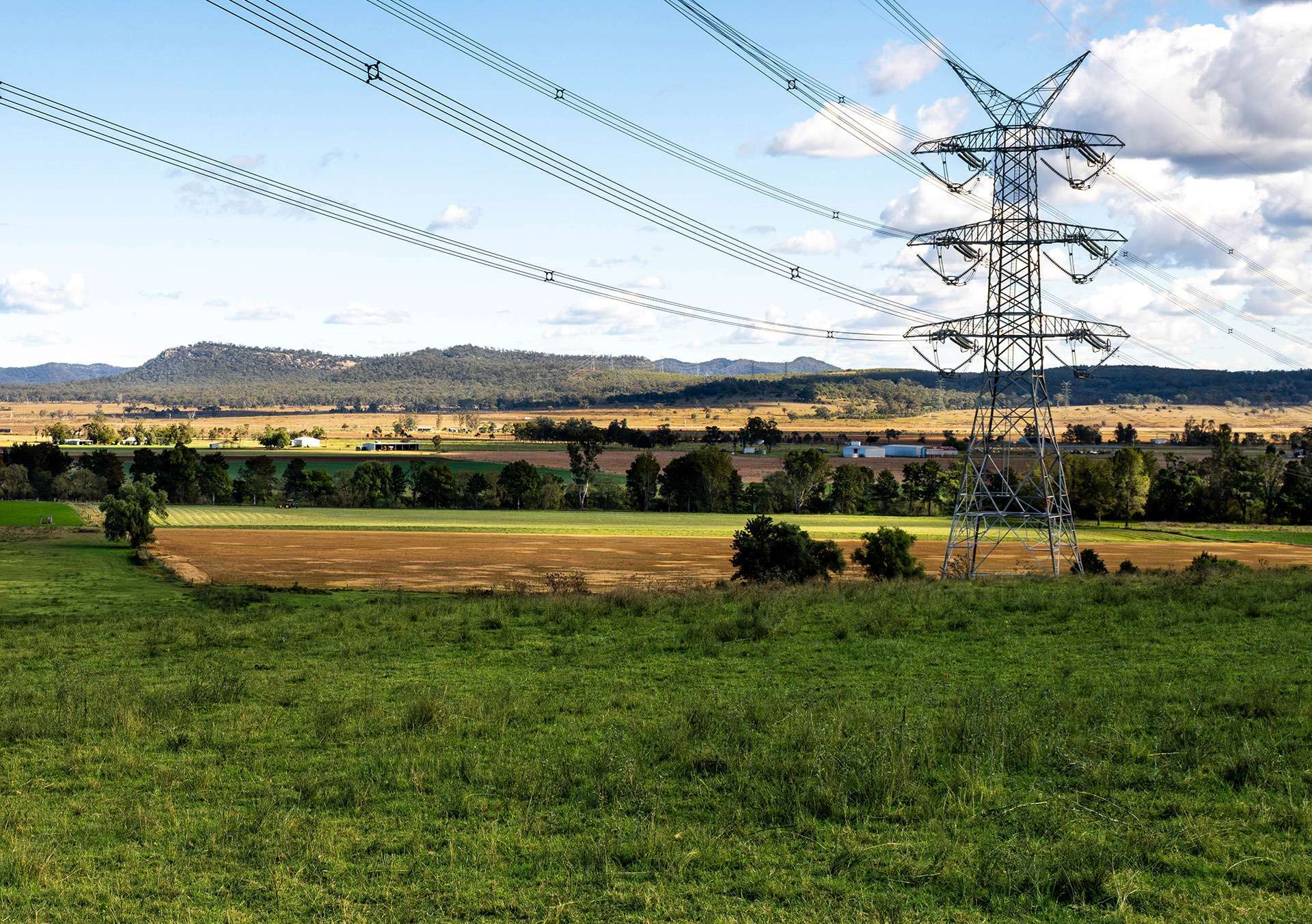
Hunter Transmission Project
Project Information Portal
As the remaining coal-fired power stations close, the Hunter Transmission Project is critical for energy security in New South Wales.
Overview
Objectives
Strategic Importance
About us
Construction Program
Fact Sheets
What is the Hunter Transmission Project? Why is it needed?
The Hunter Transmission Project (the project) is a key part of securing NSW’s energy future. It will deliver a new 110-kilometre overhead 500 kilovolt (kV) transmission line from Bayswater (near Muswellbrook) to Olney (near Eraring), connecting into the State’s 500 kV network.
The NSW energy system is undergoing a once-in-a-generation transformation as we move from reliance on coal-fired power to renewable energy to meet our daily needs.
Coal-fired power stations currently provide most of NSW’s electricity supply and the firming capacity that keeps the grid stable during peak periods such as summer heatwaves. Most of these stations are reaching the end of their operational life and will close within the next 10 years.
At the same time, electricity demand is increasing as the population grows and we electrify our vehicles, homes, businesses and industry.
This means NSW urgently needs new electricity supply and associated infrastructure.
The NSW Government has developed the NSW Electricity Infrastructure Roadmap to transition NSW to a cleaner future and ensure new supply of electricity can be reliably delivered to consumers. The Energy Corporation of NSW (EnergyCo) is responsible for coordinating delivery of the Roadmap.
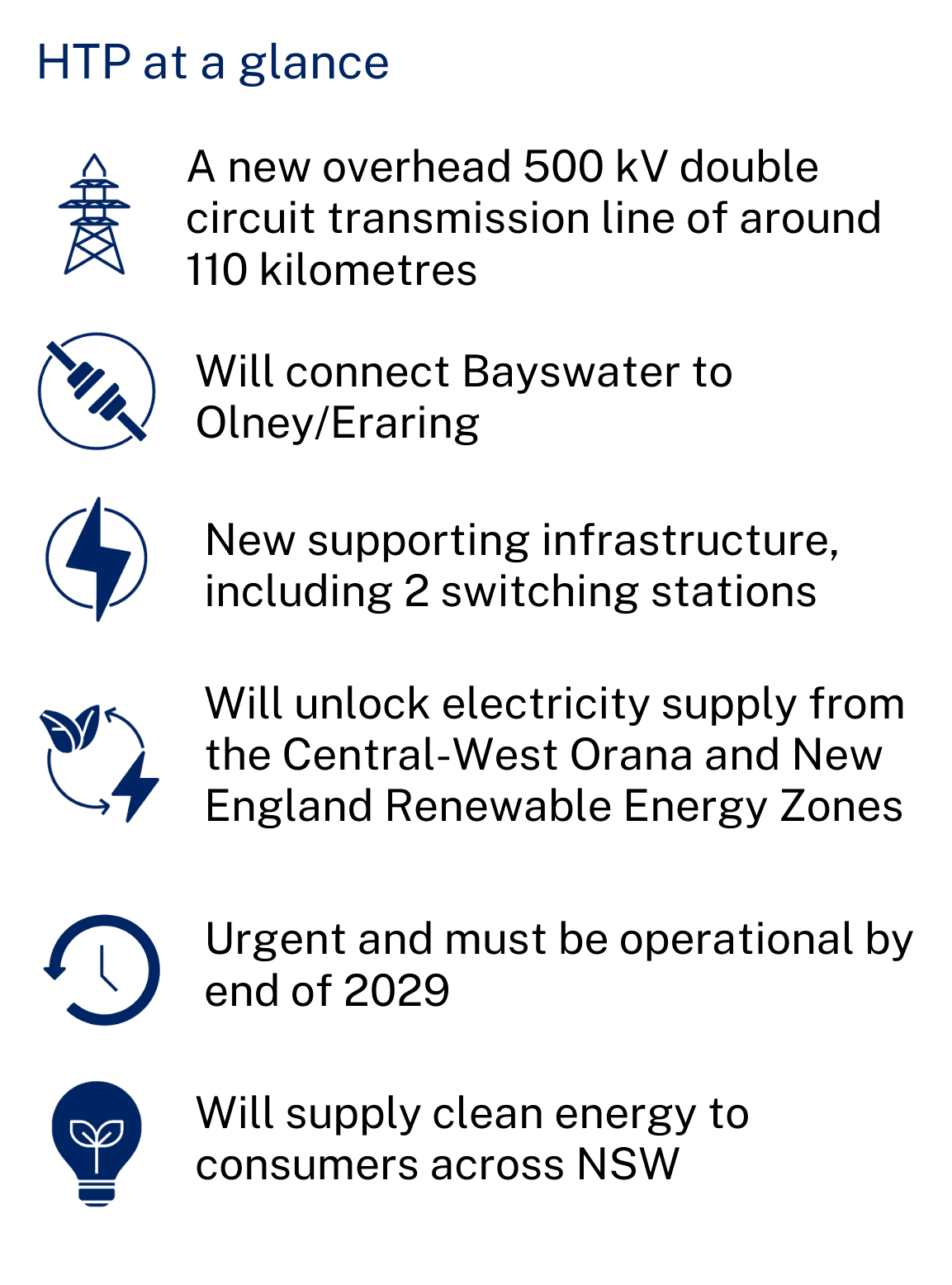
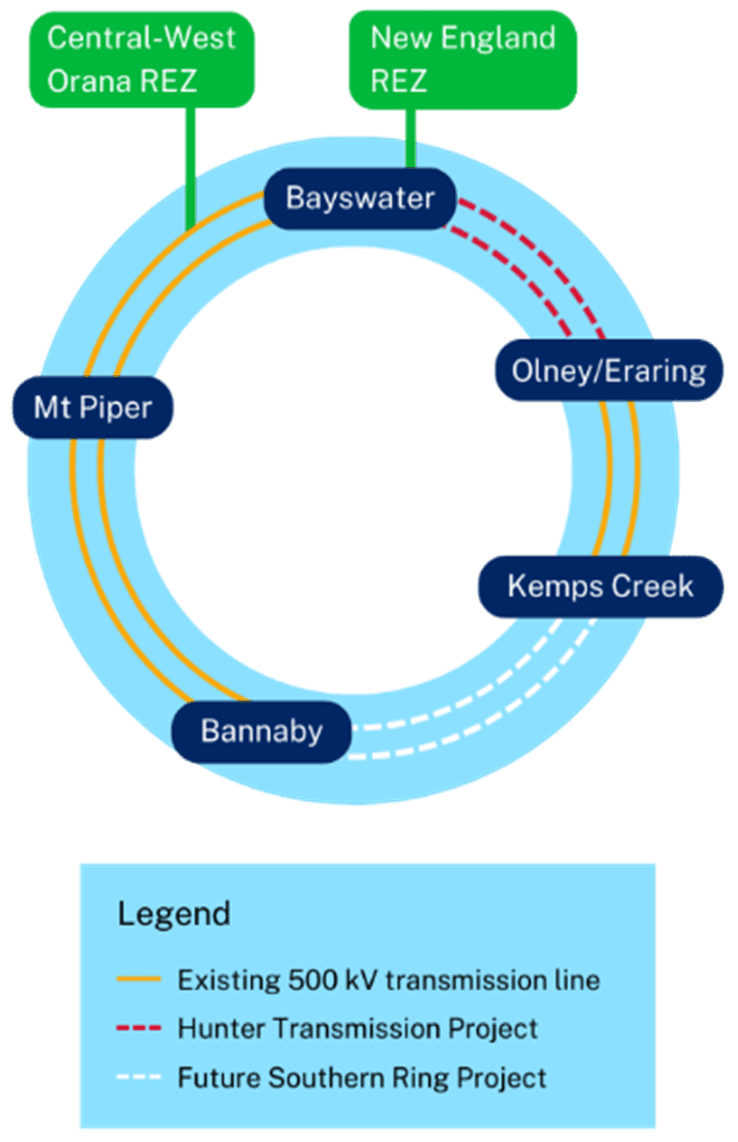
Figure 1: The ‘500kV Ring’; a high capacity 500 kV ring of transmission infrastructure carrying energy from Renewable Energy Zones (REZs) to locations where it can be delivered to consumers across NSW.
To maintain energy supply to the Hunter, Sydney and Illawarra regions, new 500 kV transmission connections are required between Bannaby substation near Marulan (south of Sydney) and Bayswater Power Station in the Upper Hunter Valley. Together with existing 500 kV transmission lines in NSW, these connections form what is known as the ‘500 kV Ring’.
The Hunter Transmission Project will close the northern gap of the 500 kV Ring, connecting Bayswater in the Upper Hunter to a new switching station in the Olney State Forest near Eraring in the Lower Hunter.
This link will unlock renewable generation from the Central-West Orana and New England Renewable Energy Zones (REZs), allowing it to flow into the electricity grid where and when it is needed. By strengthening this part of the network, the project will help keep power affordable and ensure reliable supply as coal-fired power stations retire.
See here for an overview of the Hunter Transmission Project.
What are the objectives of the Hunter Transmission Project?
The objectives of the Hunter Transmission Project are to:
provide 5 gigawatts (GW) of additional transfer capacity between Bayswater and Eraring
cost effectively enable the supply of electricity from the Central-West Orana and New England Renewable Energy Zones (REZs)
strengthen the supply of clean and reliable electricity to consumers – particularly in the Hunter, Sydney and Illawarra where 80% of the State’s electricity is used
avoid breaches of the NSW Energy Security Target as outlined in the NSW Electricity Infrastructure Investment Act 2020
harness and build on the region’s diverse skill base and provide opportunities for the community to share in the project’s benefits
commence operation by the end of 2029 providing reliable electricity to consumers at a reasonable cost
avoid and/or minimise impacts on people and the environment.
Strategic importance of the Hunter Transmission Project
The Hunter Transmission Project must be built by the end of 2029, to ensure energy security as coal-fired power stations close.
The Hunter Transmission Project:
is an urgent NSW Actionable Project under the Australian Energy Market Operator’s 2024 Integrated System Plan for the transition of the National Electricity Market to renewable energy over the next 20 years
will receive part of the $4.7 billion allocated to the NSW Government to modernise the electricity grid under the Australian Government’s Rewiring the Nation program
is a ‘Deliver Now’ project under the Network Infrastructure Strategy for NSW to support the delivery of the NSW Electricity Infrastructure Roadmap (the Roadmap). The Roadmap is a plan by the NSW Government to transition the state to a cleaner energy future and ensure this new supply of electricity can be reliably distributed to consumers
is a Priority Transmission Infrastructure Project under the NSW Electricity Infrastructure Investment Act 2020 because it is essential for energy security and avoiding breaches of the NSW Energy Security Target.
Who is EnergyCo and Transgrid?
The Energy Corporation of New South Wales (EnergyCo) is a NSW Government agency established under the NSW Energy and Utilities Administration Act 1987. The role of EnergyCo is to maximise the opportunities created by the transformation of the NSW electricity network by planning Renewable Energy Zones (REZs) and associated infrastructure across New South Wales (NSW) to facilitate coordinated investment in transmission and generation.
In 2022, the NSW Minister for Energy declared the Hunter Transmission Project to be a Priority Transmission Infrastructure Project (PTIP) under the NSW Electricity Infrastructure Investment Act 2020 (EII Act) and appointed EnergyCo as the Infrastructure Planner for the project. As the Infrastructure Planner, EnergyCo is the proponent of the project and is responsible for carrying out detailed planning and design of the Hunter Transmission Project.
In January 2025, Transgrid was appointed as the preferred network operator for the Hunter Transmission Project.
Subject to ministerial authorisation or direction, Transgrid would be network operator responsible for delivering, operating and maintaining the project.
Transgrid operates and manages the high voltage electricity transmission network in NSW and the Australian Capital Territory (ACT). Transgrid’s network forms the backbone of the National Electricity Market (NEM), connecting generators, distributors and major end users through around 13,000 kilometres of existing high voltage transmission lines and 128 substations and switching stations.
Transgrid is working collaboratively with EnergyCo during the planning approval process and on the procurement of construction contractors (pending regulatory approval).
Proposed construction program for the Hunter Transmission Project
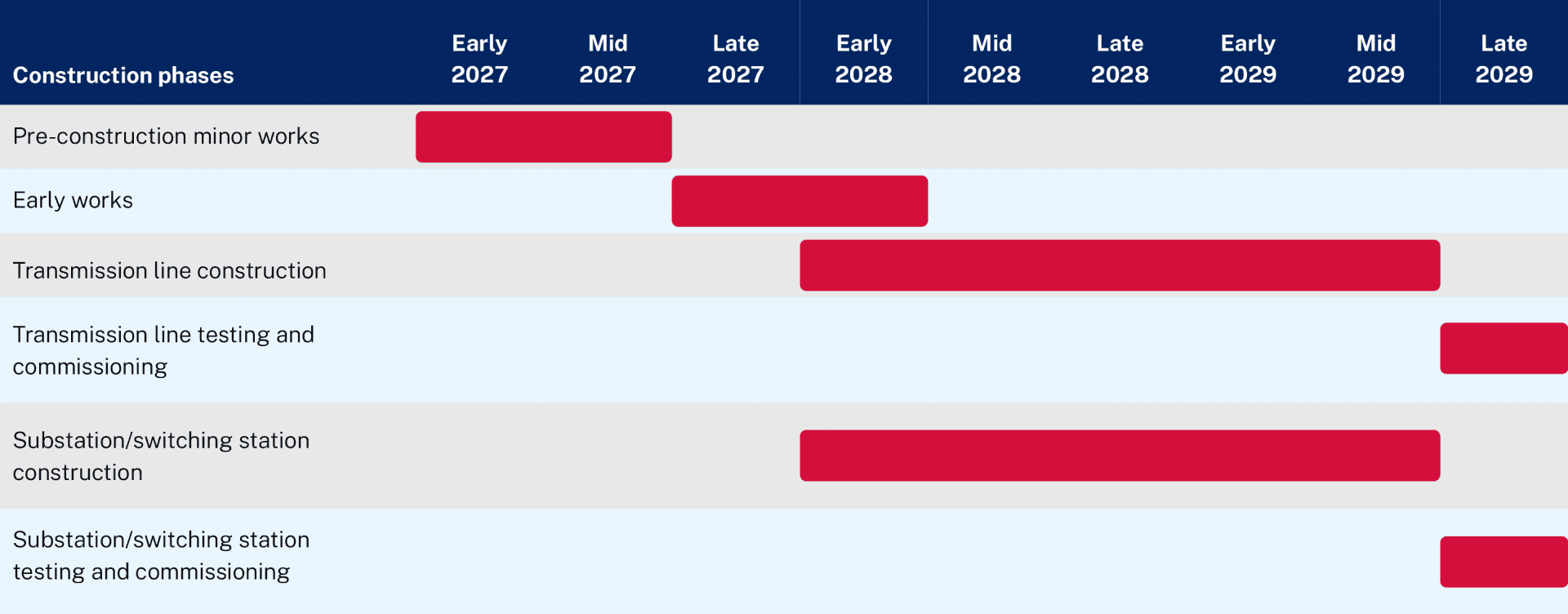
If approved, construction of the Hunter Transmission Project is expected to start in late 2027 and commence operation by late 2029.
Fact Sheets
The EIS for the Hunter Transmission Project is detailed, and we want to make it as easy as possible for you to understand what it means for your community.
We’ve created an EIS overview guide that explains the project in plain language and shows you how to make a submission.
We’ve also prepared eight fact sheets that give a clear breakdown of the main topics: Aboriginal cultural heritage, biodiversity, bushfire management, construction support sites, landscape character and visual impact, noise and vibration, social impact, and traffic and transport.
Acknowledgement of Country
EnergyCo acknowledges the Wonnarua, Awabakal and Darkinjung peoples (from north to south) as the Traditional Custodians of the lands on which the Hunter Transmission Project is located. EnergyCo pays respect to Elders past, present and emerging, and honours the enduring connection that First Nations communities have to Country, culture and community.
Our Commitment to First Nations Communities
At EnergyCo, delivering tangible benefits for First Nations people and communities is core to the organisation’s purpose. Meaningful, respectful engagement underpins this approach—working with communities, landowners and First Nations people to understand local values and co-design outcomes. EnergyCo upholds the NSW Government’s First Nations Guidelines for the Energy Transition (2024), which set the standards for respectful consultation, shared decision-making and opportunities for Aboriginal communities across NSW’s energy transition. These guidelines inform engagement with First Nations groups, including support for employment, business and cultural heritage outcomes.
Post-lodgement Frequently Asked Questions (February–March 2026)
In late February and early March 2026, EnergyCo lodged the:
Submissions Report
Amendment Report
The reports have since been published on the New South Wales Planning Portal and are now publicly available.
No. Lodgement in late February and early March 2026 marked the transition from public exhibition to formal government assessment. It does not mean the project has been approved.
The reports serve different purposes following the exhibition of the Environmental Impact Statement in August and September 2025:
Submissions Report – responds to issues raised during exhibition and explains how feedback was considered.
Amendment Report – outlines refinements and amendments made to the exhibited project in response to feedback and ongoing design development.
Together, these form the amended project now under assessment.
During exhibition in August and September 2025, 188 submissions were received.
Feedback helped to:
identify areas requiring further investigation
inform project refinements
strengthen mitigation measures and commitments
Targeted engagement also continued between October 2025 and February 2026, further informing the lodged reports.
All submissions received during exhibition in August and September 2025:
were formally considered
were assigned a unique identification number
were grouped with similar issues for consistent assessment
were addressed in the Submissions Report
The New South Wales Department of Planning, Housing and Infrastructure considers all submissions as part of its independent assessment.
No. Names and personal information are not published and are managed in accordance with privacy requirements.
The Submissions Report and Amendment Report, lodged in late February and early March 2026, are available on the New South Wales Planning Portal.
Search for Hunter Transmission Project to access all published documents.
Any further consultation opportunities will be determined by the New South Wales Department of Planning, Housing and Infrastructure as part of its assessment process during 2026.
Following lodgement in late February and early March 2026, the New South Wales Department of Planning, Housing and Infrastructure is undertaking its statutory assessment. This may include:
consultation with government agencies
requests for further information
The New South Wales Government will determine whether the project is approved and, if so, what conditions apply.
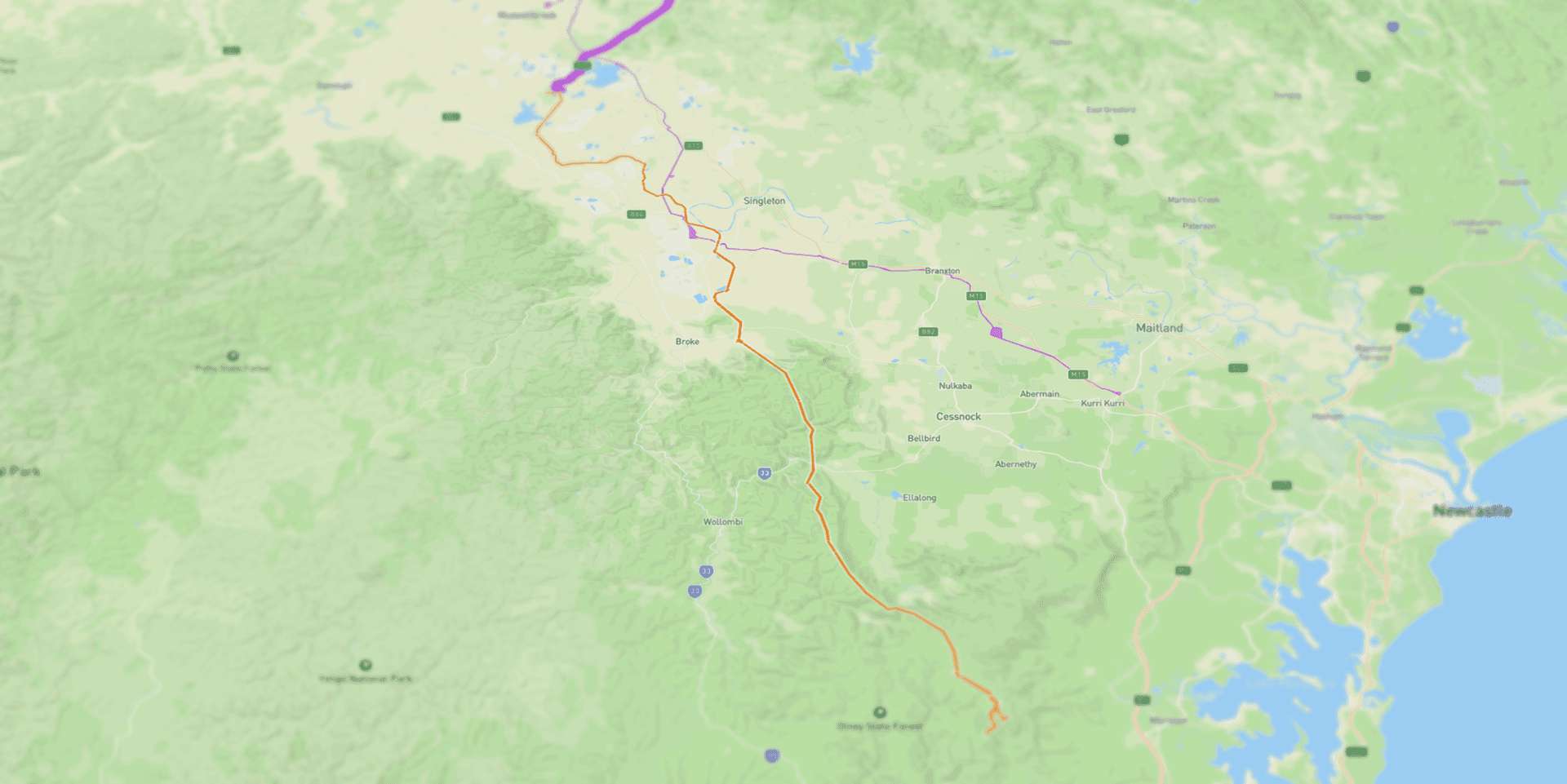
Explore the interactive map
The interactive map is the easiest way to learn about the key aspects of the Hunter Transmission Project EIS.